
Transforming Government Efficiency with AI-Supported Workflow Automation
September 1, 2026
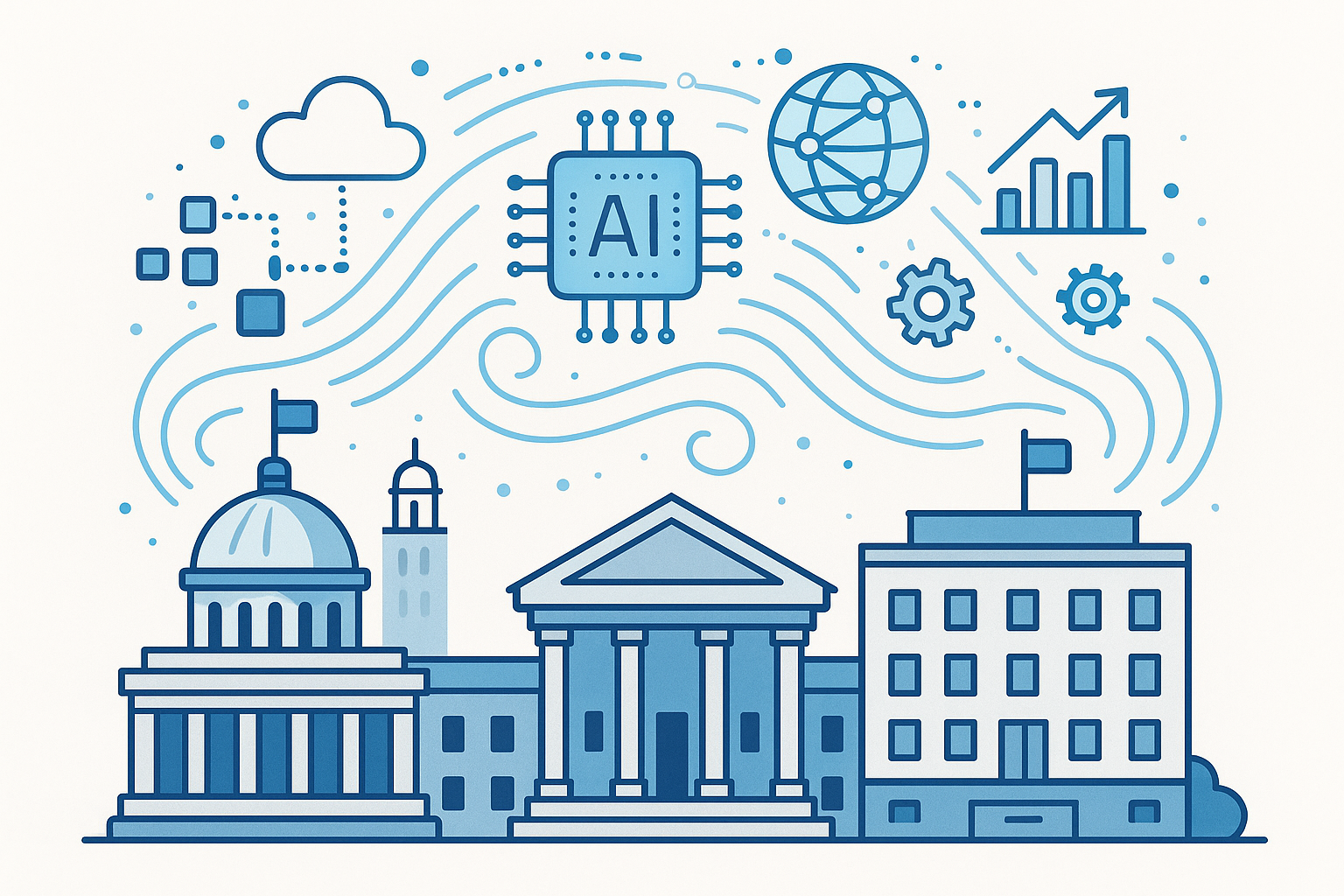
In an era where digital transformation is key to maintaining relevance and efficiency, government institutions are finding themselves at a crossroads. The demands for transparency, efficiency, and streamlined operations have never been higher. With the proper utilization of AI-supported workflow automation, government entities can radically enhance their operational efficiency, improve public service delivery, and reduce bureaucratic stagnancy.
Digital technologies are not new to government operations, but the pace at which AI has evolved presents an opportunity to tackle longstanding inefficiencies. AI, with its ability to analyze vast amounts of data and predict outcomes, can transform the way governments work. By automating routine tasks, AI frees up human resources for more critical and strategic activities, ensuring a focus on high-value tasks that require human judgment.
One of the key benefits of AI-driven workflow automation is in processing speed and accuracy. Traditional manual processes in government often suffer from bottlenecks and human error, leading to delays and inaccuracies. By implementing AI systems, governments can process enormous amounts of data quickly and accurately, thus reducing the likelihood of errors and ensuring faster completion of tasks. This results in time and cost savings, which are crucial for resource-constrained government bodies.
Furthermore, AI can play a critical role in enhancing decision-making. Through data analysis and predictive analytics, AI systems provide insights that can guide policy-making and resource allocation more effectively than ever before. For instance, by analyzing trends in public service usage, government bodies can preemptively address issues that may arise, thus ensuring continuity and quality of service.
AI-driven automation also aids in fostering transparency. When government processes are automated and data-driven, the transparency of operations increases, as there is a clear audit trail of decisions and actions. This can enhance public trust, as citizens see that services are impartial and based on objective data rather than human discretion. In addition, it can lead to improved monitoring and accountability mechanisms by providing comprehensive data insights into various governmental functions.
However, transitioning to AI-driven systems comes with its own set of challenges. Governments must address concerns such as data privacy and security, ensuring that citizen data remains confidential and protected against breaches. Also, the workforce needs to be trained and prepared for the new era of digital work processes. This calls for a reskilling and upskilling of staff to work alongside AI systems effectively. Another important area to address is the ethical use of AI, where governments must ensure that the AI systems they deploy do not inadvertently introduce bias or discrimination.
In conclusion, the integration of AI-supported workflow automation in government operations is not merely a desirable upgrade but an essential shift that can lead to monumental changes in how governments operate. The potential benefits such as increased efficiency, cost savings, better resource management, and enhanced public trust, outshine the challenges. As governments take these steps towards AI transformation, they pave the way for a more efficient, transparent, and future-ready public sector.